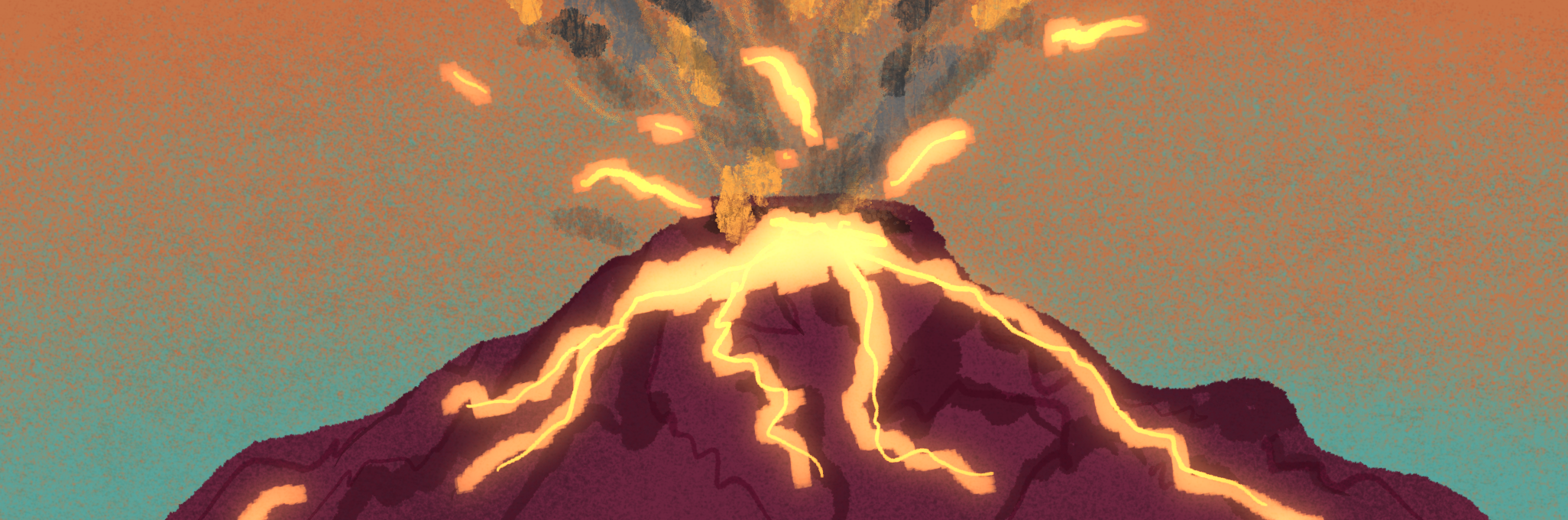
The market is a volcano
We know it will erupt. The only real questions are when, and what kind.
Every investor has stood on the slope at some point and told themselves the ground is solid. Markets have a way of looking dormant right up until they aren't - valuations drift higher, credit spreads sit becalmed, volatility trades near multi-year lows, and the consensus settles into the comfortable belief that this time the mountain has gone quiet for good. It hasn't. It's never quiet. It's building.
It’s useful to think of the market as an active volcano. An active volcano isn't dormant between eruptions - it's working the whole time, storing pressure that has to be released eventually. Markets behave the same way. The question worth asking isn't whether the next eruption is coming. It's what the signals are telling us about timing and type, and what we do about the ground we're standing on in the meantime.
No fixed cycle, and no excuse for complacency
Volcanologists will tell you, if you ask them plainly, that eruptions don’t occur to the regular beat of a metronome. There isn’t a schedule - timing depends on magma supply, chamber pressure and tectonic stress, none of which move to a calendar. Long-run data does, however, give scientists a statistical recurrence interval: an average gap between past events, useful for hazard planning over decades, but useless for calling next Tuesday.
Markets are no different. Cycle-length arguments - "the average bull market runs X years" - are base-rate thinking dressed up as forecasting. They tell you roughly how much pressure has historically built before release, not when release is due. Anyone waiting for a calendar to tell them when to de-risk is watching the wrong instrument.
What the instruments actually tell us
Where volcanology earns its keep is in precursor signals, the things that move in the weeks before an eruption even though the exact date stays stubbornly unknowable: Seismic swarms as magma forces its way upward; ground deformation, measured in millimetres, as the chamber inflates;and rising gas emissions and shifting gas ratios as pressure finds new pathways to the surface. None of these signals fix a date. But together, they shift the odds from "eventually" to "elevated, and soon”.
What they do is move the probability mass, from "this is fine" to "pay attention”. That shift in odds, not a forecast, is what disciplined portfolio construction is actually built to respond to.
Timing is only half the problem: Type is the other half
Volcanologists distinguish sharply between effusive eruptions (like Kilauea in Hawaii) , in which slow-moving lava flows reshape the landscape without much drama; and explosive eruptions (like Krakatoa in Indonesia), where trapped gas turns pressure into a significant event that starts with little warning . Often the type only becomes clear in the final hours, as the signals sharpen.
Markets have their own version of this split: the orderly correction that reprices risk over weeks and lets capital rotate calmly, versus the disorderly, gap-driven unwind that takes liquidity with it. The precursor signals overlap heavily between the two. What tends to determine which one plays out is how much leverage and crowding has built up in the system beforehand - the equivalent of how much gas is trapped versus how many open pathways the pressure has to escape through. Positioning, not just valuation, is often the difference between a correction and a crash.
Farming the slopes
Here is the part investors tend to forget in their rush to de-risk: some of the most productive farmland on earth sits on volcanic slopes, not despite the volcano but because of it. Coffee from Indonesia, Guatemala and Kona; wine from Etna, Santorini and the Canary Islands; the rice terraces of Java - all of it drawing on soil that volcanic ash keeps replenishing, mineral-rich in a way flatland soil rarely matches.
The same logic holds in markets. The regions of opportunity that sit closest to real risk - concentrated growth capital, emerging leadership in a new cycle, businesses built on the frontier rather than the fortress - are frequently where the best long-run returns are grown. That isn't an argument for recklessness. It's an argument for farming deliberately: sizing positions, watching the instruments, and staying close enough to the fertile ground to benefit from it without building the portfolio equivalent of a house at the base of the crater.
What comes after
The most important thing about an eruption is rarely the eruption itself - it's what follows. Mount St Helens, blown apart in 1980, was hosting elk herds, wildflower meadows, and a rebuilt lake ecosystem within a few decades, and is now preserved as a National Volcanic Monument. Surtsey rose from the sea off Iceland in 1963 and stands today as a living laboratory of life colonising new land. Nutrient-rich ash goes on to build some of the most fertile agricultural regions on the planet. Volcanism, given enough time, builds entire landmasses.
Markets reward the same patience. A correction - even a disorderly one - clears out excess leverage and weak business models the way an eruption clears old growth. What regrows afterward is usually stronger, and the capital that stayed close enough to the mountain to understand it, rather than fleeing the range entirely, is best placed to farm what comes next.
We don't get to choose whether the mountain is active. We only get to choose how closely we watch it, and how deliberately we farm the ground around it.
Market precursors to watch
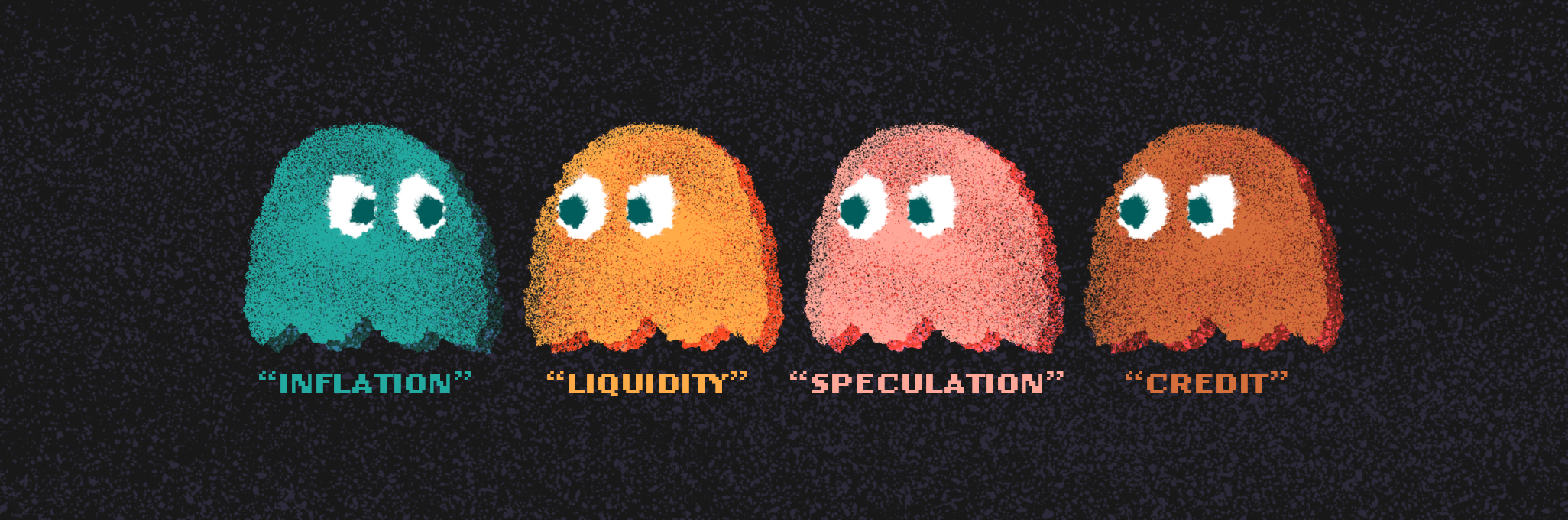
Credit spreads widening from unusually tight levels: the market's tremor gauge.
Leverage and positioning data: the equivalent of chamber inflation.
Volatility regime shifts, even from a low base: a change in gas ratio, not just gas volume.
Liquidity and funding stress in short-end markets: often the first crack before the surface visibly moves.
More like this